Showing posts with label Fish. Show all posts

Tuesday, April 25, 2017

BULLSNAKE! And Emiquon, Too!

Right, time to finish up that Mason/Fulton County trip I did a few weeks ago.  You can read about the part where we visited Revis Hill Prairie here.  We stopped to eat lunch afterwards, at Chautauqua National Wildlife Refuge.  This gave us a good idea exactly how flooded the river was, as  the lake was considerably higher than the last time I was there.


A few Ruddy Ducks (Oxyura jamaicensis) slept in the middle of the lake as we sat eating our lunch.


A couple of Northern Shovelers (Anas clyptea) flew by, too, showing off all their colors.


Several Red-eared Sliders (Trachemys scripta) sat in the muddy water.  This lake, I've been told, used to be much fuller of fish and more scenic before the government put a levee across the middle.  That and the introduction of Asian carp to these waters seems to have worsened the water quality.   Still, even in a reduced state it's an appreciable place for nature.


Several American White Pelicans (Pelecanus erthrorhynchos) sat out on sandbars, and one flew right over our heads.  The majority of people with me weren't birdwatchers, but pelicans are a bird everyone can appreciate, given their size and bill.

The pelican landed just behind us in a small bay, where it posed for photos.  After this, we went over to Sand Ridge State Forest and into the desert of H.A. Gleason State Nature Preserve.


Two of the four of us had never been to H.A. Gleason, so we trekked over the sands.


The breeze had kicked up, and we walked through the dry grasses as they blew in the wind, north towards a tall dune named the Devil's Neck.  I call this grass patch the "Devil's Prairie" as I always end up with ticks when crossing it.


Once on the Devil's Neck, we found a few small members of the Mustard family, inlcluding this Draba reptans, but one a bit rarer than the rest:


The famous Silvery Bladderpod (Lesquerella ludoviciana) while in bud, was not in flower (at the time, though on a second visit later...)


I love the giant sandbox that is this part of Mason County.

Now, I'm not going to say exactly where this tree is, but it is in the vicinity of our previous locations.  The reason for this is simple- snakes like this are often taken from the wild.  As a result, I will say that this is in Mason County, but no more than that.


I had walked ahead of the group, looking on the ground for snakes.  Someone called out "Snake!" and I immediately ran back to see it.  We had discussed the possibility that there might be some Racers in the vicinity, but as soon as I saw it, I happily screamed. "Bullsnake!"  (Pituophis catenifer sayi).


Bullsnakes are the largest snake species in Illinois, and while this wasn't a big one, it was about three and a half to four feet long.  They are most often seen in Illinois on the "Kankakee Sands", south of Chicago along the state's northeastern border with Indiana.  The Mason County population is similar, but far less photographed by herpers. This snake resides in the sand-prairie regions of Illinois, and avoids the black-soil former prairie areas throughout most of Illinois.


This was a beautifully-patterned snake. Unfortunately, I don't have a clear photo, and they get the name Bullsnake for their aggressive-if-handled temperament.  I let the snake climb higher in the tree, and both it and I were happier for it.


In the same area, we found some Corydalis flavula, a favorite of mine that I don't see near home.

A member or two of our group had never seen a wild Bald Eagle before, so I decided to show them a nest I'd found.  As we approached, the Bald Eagle flew off of the nest.  It wasn't a great look, but they did finally see a wild Bald Eagle!


We then went off to Emiquon, and realized quickly that while the levee-protected Thompson Lake wasn't very high, the surrounding area's floodwaters were far higher than usual!


We started watching fish in the shallows, including this Shortnose Gar (Lepisosteus platostomus) below.  Obviously, I've tweaked the photo so that you can see the gar.  I had never seen a gar in the wild before, and it was quite fun to watch as it cruised along the water's surface.


Far off in the distance, we spotted an Osprey (Pandion haliaetus)  flying past.  It dove for a fish just after this photo was taken.  Ospreys may be State-endangered, but here they're an easy bird to see.


At the Emiquon Visitor's Center, several Savannah Sparrows (Passerculus sandwichensis) (named for Savannah, Georgia) hopped about in the grass on the edge of the wetland.

We saw several other interesting birds, some or all of which will be mentioned in the future.  After a brief drive-about, we took a photo of the lake and left for home, stopping at Dairy Queen on the way.  It was a fine end to a long day of exploring.  Little did I know I'd be back the next weekend...


Saturday, December 31, 2016

Favorite Pictures of 2016 + Lifers of 2016!


Happy New  Year!


Swamp at Beaver Dam State Park


Water Willow (Justicia americana) at Lake Springfield

Mallard (Anas platyrhynchos) takes off at Center Park, Lake Springfield


Pere Marquette State Park


Sunbeams in Sand Ridge State Forest

Cedar Waxwing (Bombycilla cedrorum) in Michigan

Rapids of Sangamon River at Carpenter Park

Graham's Crayfish Snake (Regina grahmii) at Lake Springfield

Muskrat (Ondatra zibethicus) at Emiquon Preserve

 Least Sandpiper (Calidris minutilla) at Lake Springfield


Total Lifer Birds of 2016- 108 lifer birds


9 Birds of Prey: Northern Harrier, Rough-legged Hawk, Red-shouldered Hawk, Sharp-shinned Hawk, Barred Owl, Short-eared Owl, Merlin, Peregrine Falcon, Screech Owl

25 Waterfowl: Greater White-fronted Goose, Ross' Goose, American Black Duck, Gadwall, Northern Shoveler, Northern Pintail, Green-winged Teal, Blue-winged Teal, American Wigeon, Canvasback, Redhead, Ring-necked Duck, Greater Scaup, Lesser Scaup, White-winged Scoter, Surf Scoter, Bufflehead, Common Goldeneye, Hooded Merganser, Common Merganser, Common Loon, Pied-billed Grebe, Horned Grebe, Red-necked Grebe

2 Herons: Little Blue Heron, Black-crowned Night Heron

17 Sandpipers: American Golden-Plover, Semipalmated Plover, American Avocet, Black-necked Stilt, Spotted Sandpiper, Solitary Sandpiper, Greater Yellowlegs, Lesser Yellowlegs, Semipalmated Sandpiper, Least Sandpiper, White-rumped Sandpiper, Pectoral Sandpiper, Short-billed Dowitcher, American Woodcock, Stilt Sandpiper, Wilson's Pharalope, Marbled Godwit

8 Gulls and Terns: Bonaparte's Gull, Franklin's Gull, Sabine's Gull, Lesser Black-backed Gull, Caspian Tern, Common Tern, Forster's Tern, Black Tern,

47 Songbirds: Eurasian Collared-Dove, Common Nighthawk, Whippoorwill, Red-headed Woodpecker, Yellow-bellied Sapsucker, Hairy Woodpecker, Eastern Wood-Pewee, Willow Flycatcher, Warbling Vireo, Red-eyed Vireo, Yellow-throated Vireo, Blue-headed Vireo, Northern Rough-winged Swallow, Cliff Swallow, Sedge Wren, Winter Wren, Hermit Thrush, Wood Thrush, Yellow Warbler, Cape May Warbler, Pine Warbler, Northern Waterthrush, Orange-crowned Warbler, Common Yellowthroat, Hooded Warbler, Wilson's Warbler, Black-throated Green Warbler, Yellow-breasted Chat, Carolina Chickadee, American Tree Sparrow, Field Sparrow, Lark Sparrow, Savannah Sparrow, Henslow's Sparrow, Lincoln's Sparrow, Fox Sparrow, White-crowned Sparrow, Blue Grosbeak, Dickcissel, Bobolink, Summer Tanager, Eurasian Tree Sparrow. Purple Finch

OTHER ANIMALS AND PLANTS

 9 Lifer Reptiles: Spiny Softshell, Smooth Softshell, Common Map Turtle, Eastern Box Turtle, Six-lined Racerunner, Blue Racer, Chicago Garter Snake, Prairie Kingsnake, Graham's Crayfish Snake

5 Lifer Amphibians: Fowler's Toad, Western Chorus Frog, Spring Peeper, Smallmouth Salamander, Spotted Salamander

3 Lifer Mammals: Beaver, River Otter, White-footed Mouse

9 Lifer Fish:  Logperch. White Sucker, Redear Sunfish, Orangespotted Sunfish, Green Sunfish, White Crappie, White Bass, Yellow Bass, Yellow Bullhead.

Total Lifer Animals: 134!

70 Selected Lifer Plants (Orchids in bold, non-natives struck through):  White Cedar, Wood Betony, Green Dragon, Cream Violet, Hoary Puccoon, Fringed Puccoon, Pale Beardtongue, Small-flowered Skullcap, Tennessee Milk Vetch. Prairie Ragwort, Western Wallflower, Ebony Spleenwort, Goat's Rue, Field Horsetail, Marsh Fern, False Indigo-Bush, Purple Rocket, Gray's Sedge, Smooth Ruellia,  Silvery Bladderpod,  Prairie Sunflower,  Short Green Milkweed, Thimbleweed, Leadplant, Pale-spike Lobelia, Western Marbleseed, Hoary Vervain, Royal Fern. Round-leaved Sundew, Grass Pink, Yellow-fringed Orchid, Pink Ladyslipper, Spoonleaf Sundew, Rose Pogonia,  Bog Yellow-eyed Grass, Horned Bladderwort, Swamp Rose, Lowbush Blueberry, Kalm's St. John's Wort, Wild Lupine, New Jersey Tea, Hairy Puccoon, Prairie Phlox, Tall Thimbleweed, Skunk Cabbage, Michigan Lily, Eurasian Helleborine, Safflower, Allegheny Monkey Flower, Spotted Beebalm, Hemp, Halbard-leaved Rose Mallow,  Clammy Weed, Boxelder, Virgin's Bower, Eelgrass, Water Forget-me-Not, Swamp Rose Mallow, Hog Peanut, Rough Blazing Star, Field Goldenrod, Bronze Fern, Great Plains Lady's Tresses, Bradley's Spleenwort, Shortleaf Pine, Cliff Onion, Cutleaf Grape Fern, Rose Verbena, Giant Cane, American Mistletoe

27 Protected Species seen (State or Federal Threatened or Endangered):  Northern Harrier, Short-eared Owl, Osprey, Little Blue Heron, Black-crowned Night Heron,  Forster's Tern, Common Tern, Black Tern, Smooth Softshell, White Cedar, Tennessee Milk Vetch (also State-endangered), Silvery Bladderpod, Regal Fritillary,  Grass Pink, Yellow-fringed Orchid, Rose Poginia, Pink Ladyslipper, Leatherleaf, Round-leaved Sundew, Spoonleaf Sundew, Tamarack,  Buckbean, Eastern Hemlock, Kalm's St. John's Wort, Smooth Softshell, Bradley' Spleenwort, Shortleaf Pine,

26 New Nature Preserves visited- Carpenter Park, Manito Prairie. Sand Ridge, Henry Allan Gleason. Chautauqua NWR, Emiquon, Emiquon NWR, Matanzas Prairie, Scrub Oak-Sand Prairie, Revis Hill Prairie, German Cemetery Prairie, Pinhook Bog. Cowles Bog,  Loda Cemetary Prairie,  White Pines Forest, Castle Rock, Nachusa, Rogue River, Calamus Lake, Spitler Woods, Bois de Sangamon, Piney Creek Ravine, Fults Hill Prairie, Horseshoe Lake, Cypress Creek NWR


Y'know, some people have really hated 2016, but for all the reasons above, I've kinda enjoyed it.

Monday, November 7, 2016

Tasering Fish For Science?! ... Vertebrate Zoology Journal #BONUS#


Bridgeview Park

Thursday, October 27, 3:45 PM to 4:00 PM  

Temperature: 60-ish degrees Fahrenheit

Weather:  Sunny to partly cloudy


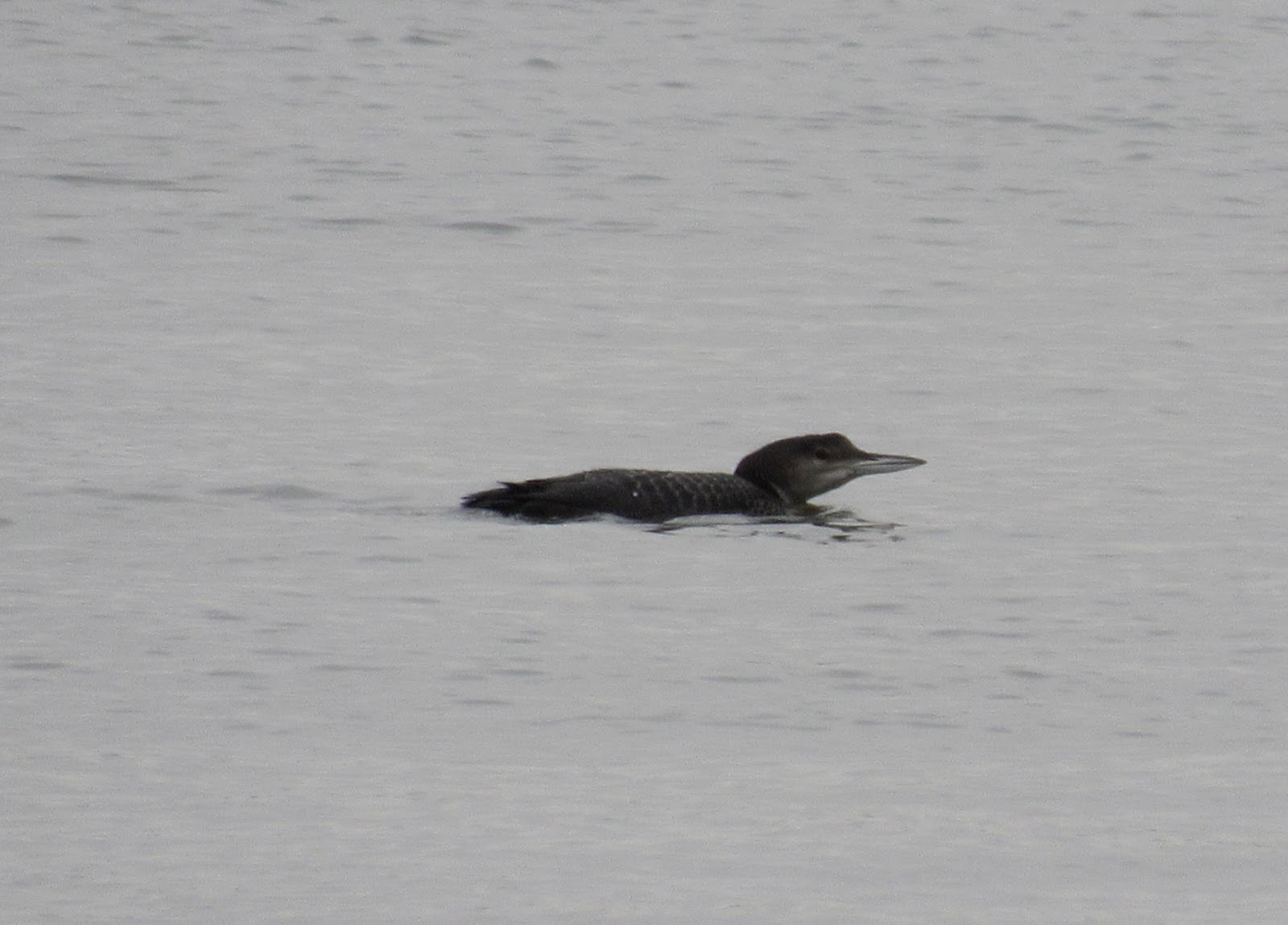
Before getting into the actual trip itself, I'm going to go off-journal for a bit.  Earlier in the day, I'd been at Marina Point, when I spotted my favorite bird (above and below):


This is the fall-plumaged  Common Loon (Gavia immer), my favorite bird.  As I've explained before, I appreciate this bird for three reasons:  It spends lots of time in the wilderness, it's quite awkward on land, and it enjoys making weird noises at night.  All three of these habits of the loon I consider applicable to me personally, especially the last one.  According to Ebird, this was the first Common Loon seen on Lake Springfield this fall, though I doubt it actually was.

As usual in October, there were about one hundred American White Pelicans (Pelecanus erythrorhynchos) at the mouth of Sugar Creek.  It somewhat saddens me that I'm getting to the point where I go,  "Oh, it's just a pelican."  Back when I first saw these, they gave me so much joy, and now I don't even look twice.  I suppose this is the indifference of experience.  The commonplace becomes the ignored all too soon.  Thankfully, birds move on, and once the temperature goes down a bit, pelicans will become rare and I will start wanting to see them again.


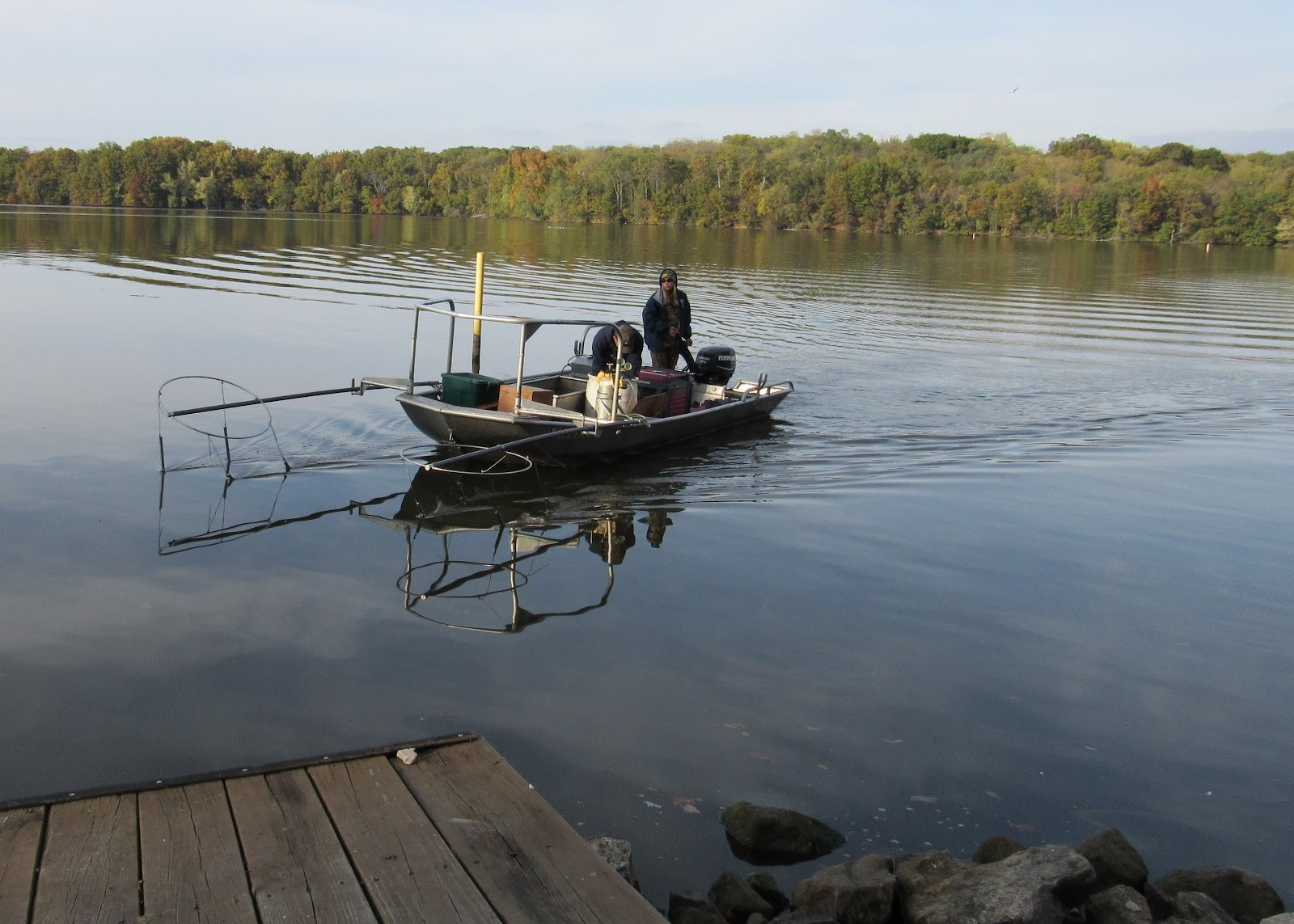
Alright, time to electrocute some fish.  On a field trip at Bridgeview Park, we met with two IDNR biologists who were studying the fish in Lake Springfield.  They had already zapped up some fish.  All of these fish are alive, by the way.  Electroshocking, which is the correct name of this procedure, is using an electrical shock inputted into the water to stun fish, making them easier to catch, examine, and release.  They are not harmed by this (so far as we know) and are promptly released back into the water immediately afterwards.


 An exceptionally large Freshwater Drum (Aplodinotus grunniens) was the first fish of the day, captured some time before we arrived.  Don't ask me why it's called a Drum, it just is.


This White Sucker (Catostomus commersonii) was a new fish for me.  These fish aren't related to the "suckerfish" of aquaria (those are a type of catfish).  Instead, they're more related to minnows.


Here's a far less welcome fish, itself a minnow, the Common Carp (Cyprinus carpio).  Introduced from Europe, these bottom-feeding fish help to contribute to the muddiness of Lake Springfield's water by stirring up the silt on the lake bottom as they feed.  This increases the pollution of the lake and makes it far less healthy.  Hurrah.  And they aren't half so bad as Asian Carp!


 White Crappie (Pomoxis annularis) on top and Black Crappie (Pomoxis nigromaculatus) on bottom, showing the difference between the two fish.  That's pronounced "Croppie" to you non-fishers.


Largemouth Bass (Micropterus salmoides)  demonstrates its name quite well.   The black marks on the tail are a natural, if unusual, coloring pattern.  This fish generates thousands of dollars on Lake Springfield from fishermen seeking these fish.


White Bass (Morone chrysops), while native, are stocked in this lake for fisherman, as are many of the fish caught.  For those not familiar with the term stocked, it means that the state fisheries bring in young White Bass in large numbers and release them for fishermen to catch.


White and Yellow Bass (Morone mississippiensis) (on bottom) show the size difference between these two.  Once they had gotten this far through the fish, our two IDNR guides took us out on the boat.   In front are poles with electrical emitters in the water.  These, every so often, are charged, and the fish are shocked.  If we were to touch them directly, it would kill us, most likely, but the fish are fine because the water takes the brunt of the shock.  Our job is to then scoop the fish into nets:


We split into two groups in order to do this, and when it was my group's turn onshore, we measured and recorded some of the fish we'd caught.


First up was Illinois' state fish, and one of its most common, the Bluegill (Lepomis macrochirus).  I've caught so many of these before that they kind of bore me.  Let's move on.


Redear Sunfish (Lepomis microlophus) (the red "ear", actually a red dot on the gill cover, isn't visible here) are fairly common in Illinois, though I've never seen one before.  Illinois fish are new for me.


This is a Green Sunfish (Lepomis cyanellus).  Green Sunfish can survive nearly anything, so finding a large number of these is a sign of a polluted watershed.  Thankfully, they are also present in small numbers in almost any body of water, and we found only a few.  Still, Lake Springfield is fairly polluted.  On a healthy large lake, there should be a mayfly "bloom", when large numbers of mayfly insects emerge at the same time for a few days, feeding all the wildlife around.  This happens on Lake Carroll, where I usually go fishing.  We don't have that here on Lake Springfield.  Likely, this is the carp's fault, but there is enough speedboat traffic and other possible factors that could pollute the water enough for mayfly blooms to not happen.


We  also had a Channel Catfish (Ictalurus punctatus).  Catfish, for the unaware, are named for their whiskers. They have venemous fin barbels that, while not deadly, do hurt a lot if you grab the catfish wrong.  The way it is being held above is correct.  Some people think that the whiskers hurt, but they don't.  Whiskers, on a catfish, are used to taste and smell their food.  They roam about on the bottom of the lake, eating almost anything there.   Channel Catfish grow quite large, and taste great  (No fish were harmed, except for one Gizzard Shad eaten by the nearby gulls, in the making of this field trip.)


Yellow Bullhead (Ameiurus natalis) are a smaller catfish, but with similar habits and fin barbs to the Channel Catfish.  They are much smaller, however, and commonly found in muddy farm ponds.


Here I am, measuring a Largemouth Bass.  In order to see how well the fish are doing and growing, how well stocking went, and how many adult fish there are, IDNR weights, measures, and records as many of the fish as they can when electroshocking. They can't always do this with every fish...


Gizzard Shad (Dorosoma cepedianum) are Lake Springfield's most common fish, it seems.  Everything eats them (we found shad in the mouths of a few bass we caught).  These incredibly common fish eat plankton (microscopic life) found in the water.  They are fairly slimy when handled.


I had no idea of the name of this fish.  When asked, I said that it was an orange-spotted sunfish, in a guess.  Actually, the common name is Orangespotted Sunfish (Lepomis humilis).  Well, then!  They're tiny.  I'd love to take a few home and put them in an aquarium, to be honest.  (All fish were released back into the lake, by the way, even the carp.)


I turned around at one pount, and found this Common Snapping Turtle (Chelydra serpentina) behind me! I did jump, a bit. Evidently, the IDNR biologists had brought a few turtles to show off.  These are captive turtles, but there's nothing captive about a snapping turtle.  They will try to bite you with that beak of theirs, but only if you get too close.  You can get pretty close, as seen below:


It  is said that birds are the closest relatives of dinosaurs, but this turtle does look the part better.

This half-blind Spiny Softshell Turtle (Apalone spinifera) was another captive turtle they had.  This spines referred to are along the front edge of the carapace (top shell), just above the head.  On a Smooth Softshell Turtle, these are absent.   Both species of softshell turtles prefer large lakes and rivers, especially ones with sandbars or beaches (although, suprisingly, there is a Spiny Softshell Turtle in the Lincoln Land pond, which I see occasionally).


Here we have a Homo sapiens and a Red-eared Slider (Trachemys scripta elegans), the last two animals of the trip, excluding all the birds. There were quite a few common birds, but as this is a bonus journal, I no longer feel inclined to list every single bird and its specifics of when and where I saw it.  There will be a couple more articles on the field trips I'll be going on, but those will be straight-up posts, not journal entries.  I'm going to keep including Ebird checklists, as a certain subset of my readers will probably appreciate that.

 Hope you all enjoyed what seems to be a Lake Springfield fish ID guide, albeit missing most of the species found here.  I've been busy birding, and I've seen quite a few, including PEREGRINE FALCONS! so be watching for that.  Goodnight (or morning, or afternoon, I'm just writing this at night.  Honestly, you'd think after 111 posts and over a year of doing this, I'd know how to end a post.  Nope! I still have no idea.  A good conclusion in hand is worth three introductions in the bush.)

Ebird Checklist:

 http://ebird.org/ebird/view/checklist/S32262124