Showing posts with label Starved Rock. Show all posts

Sunday, April 17, 2016

Top Ten Best Moments of First Quarter of 2016


Winter is over here in Central Illinois.  I figured it was time to do a recap of the best (nature) moments of that season, as that is the first season in which I sincerely dedicated a good portion of time to this blog.  (I'm just going to run it through March, and since we're still getting frost warnings and have juncos,  I believe that qualifies.  Until the juncos go north, it's still winter.) I'm also writing this post as a sort of index of what's worth reading on my blog from January-March 2016.  This article is thirty-three posts condensed into one. with links to the top fifteen or so posts.  I know a lot of you are busy, so this is kind of a "catch-up" article.


Honorable Mention: Being Published In  "The Lamp" Newspaper

Well, seeing my work in print is a fun experience.  I actually haven't released my second article out on this blog, partially due to the fact that it is about Eastern Hemlocks.  It will be released out here soon.  Also, the picture above which went with the article and  which I have actually set as my phone background, was taken by my brother.  He did not receive credit, so I am giving it to him here.


10. Discovering Marina Point

This is one of the three best birdwatching areas around Lake Springfield, along with Lincoln Memorial Gardens and Center Park.  I knew about the other two, but I had no idea of Marina Point until recently.  As you can see, the ducks and gulls are enjoying it immensely.


9. New Deer/Turkey Record

59 deer and 27 turkeys is a huge number of wild animals to find along one road.  Yet, all the way back in January, that's exactly what I did at Chatham Wildlife Sanctuary.  A recent visit had three deer and no turkeys, and the animals seem far more common in the winter.  Still, it's worth a visit.


8. Finding Common Gallinules  At Lick Creek

(The picture above is from an old trip to Florida) Well,  I mean, it's not every day you do something like find a State-Threatened  Endangered Bird.  (Well,  I just looked it up, and it's even rarer than I thought, in this state.)  So far this year,  I've seen four State-Endangered birds (Short-eared Owl, Common Gallinule, Northern Harrier, and Osprey), as well as two which have since been removed from State-Threatened listing (Pied-billed Grebe and Brown Creeper) and were incorrectly said to be State-Threatened on earlier posts.  Sorry about that.  Here's the checklist I am using.


7. Common Loons In Breeding Plumage

( Look how much the photo quality improves over the years)  Common Loons may not be rare, but this is my favorite Illinois bird...


6. An American Woodcock In My Sideyard

...Although Timberdoodles are a close second.  Finding this bird was such a surprise to see in my suburban neighborhood.  I even got a video, which is posted on Youtube and linked here.  Whether called Woodcock, Brush Snipe, or Timberdoodle, this bird is basically the Illinois version of the New Zealand Kiwi, and is not nearly well known enough.  These birds dance for worms, literally.


5.Rediscovering Eastern Hemlocks in Illinois

I know I keep harping on this, but this is one of my favorite moments, and was easily the best thing I did all of last year.  The rediscovery this year at Starved Rock State Park, confirming that this IS a native population, was an excellent day, which I stretched over three posts.  (For those who don't know what I'm talking about, go here.)


4. Seeing Short-Eared Owls/Northern Harriers

These two State-Endangered birds are what got me into birding.  On top of that, meeting someone  I didn't know who reads my blog was even better.  See here for more details.


3. Fourteen Duck Species in One Park

Yeah, this was the second luckiest I got this year in terms of birds, and it came just when I started out birding.  If Short-eared Owls got me into birding, this is what got me hooked.  Despite birding for hours on hours afterwards,  I actually haven't repeated my successes of that day.  It is now a record to beat.  To recap-  I saw Ruddy Ducks, Common Goldeneyes, White-winged Scoters, Greater Scaups, Lesser Scaups, Redheads, Canvasbacks, Ring-necked Ducks, Mallards, Hooded Mergansers, Buffleheads, and Common Mergansers.  Here and here are the two articles, for more information.


2. Being Detained as a Terrorist

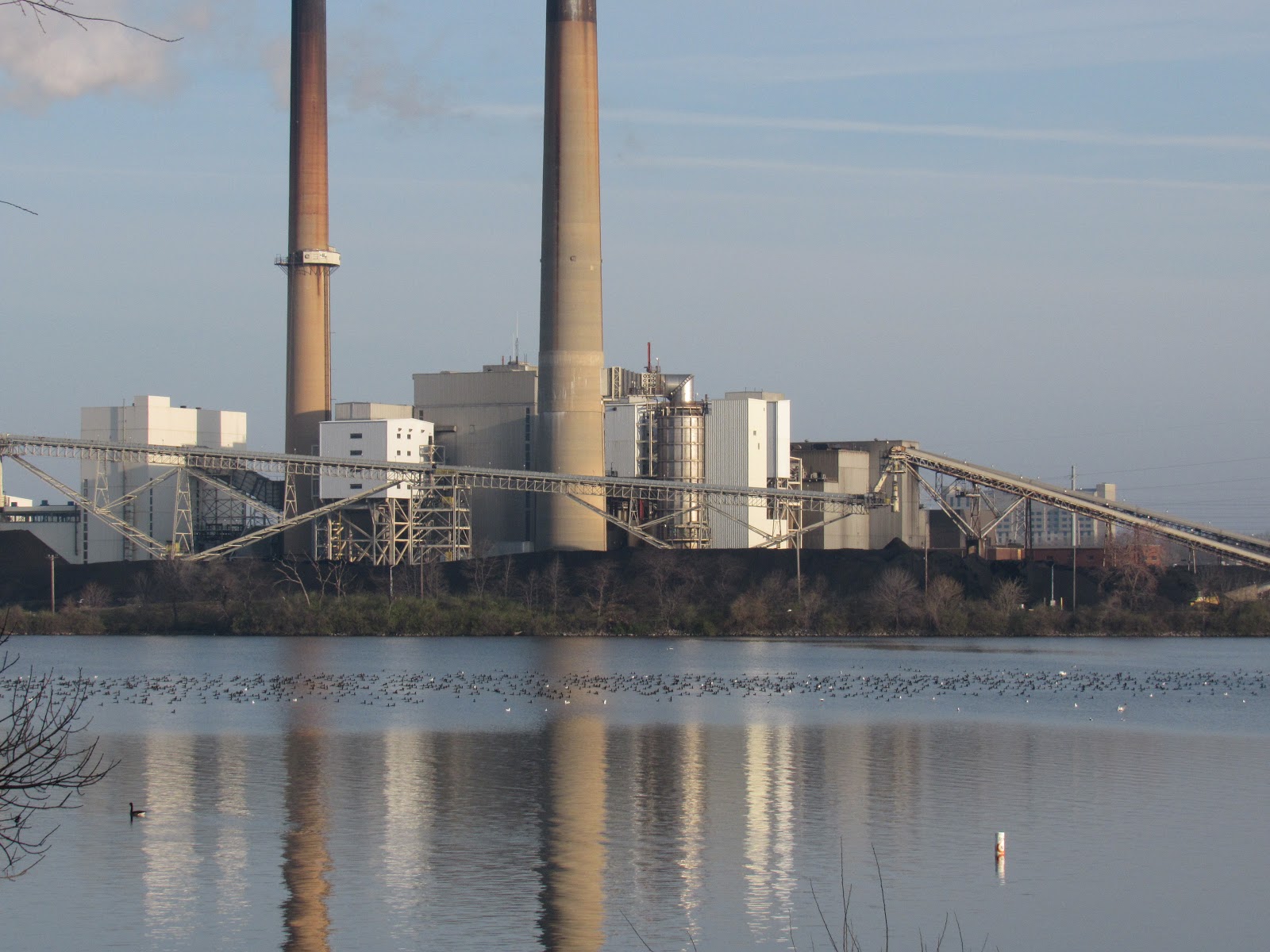
The expression people have when I say this is good enough, but the complete story is even better.  For the anecdote alone, as well as the fact that a government institution in Illinois is actually acting competantly, I give this my  #2.  To recap:  I was taking pictures of gulls in the direction of the power plant with a fancy camera.  Two Conservation Police officers saw me and asked me to step over.  They wanted to examine my pictures.  What I didn't know, as I showed them the pictures, was that my brother had taken a picture of Mom making a silly face.  As a result, the officers and I had a good laugh.  We went our separate ways.  Since the officers had called me over, it was technically detainment, and so I get to use that phrase.  Later, on a separate trip, I snapped the above picture deliberately, as a joke,( and also for the cormorant flotilla in front of it, but this was a different trip.)


1.The Ides of March

This insanely lucky day was so great that I  had to write two blogposts about it.  Seriously.  That day goes down in the annals of this blog.  It will be on the list for top ten of this year, easily.  And to think...  If I had gone ahead after lunch and skipped my chemistry lab, it probably wouldn't have happened as it did.  I had in fact, considered going off and skipping lab, as my usual lab partner was sick that day.  Instead,  I went after lab, first to Lincoln Memorial Gardens and second to Nipper Wildlife Sanctuary as a field trip.  Both were great experiences.  I was also very lucky to get decent pictures, as the upload glitched, resulting in a near-catastrophe and considerable hair-pulling.  That was the day I saw my first loon, my first chorus frogs, my first fairy shrimp... It was a huge day.  The colorful Eastern Garter Snake (Thamnophis sirtalis) below was a bonus.


I  recently learned that I am going to visit the Smokies this year, so I can't wait. Expect that in a couple months' time.  And to think...  I'm not even in my twenties yet. I've gotten two flexible part-time jobs,  my schooling is going pretty well, and I have a LOT of great friends, many I made or drew closer to this year.  It's a wonderful life, and I know I don't deserve all this.  Thank you,  God.  You've done way, way more for me than I could even begin to do back, and as that is how it should be, I am so thankful for all that I have.  Also, thanks to all my friends, especially the ones who put up with the Russian folk music between hikes, and to the many nature bloggers online who inspired me to write my own blog.  It's fascinating to me how in the middle of this busy week, I still feel thankful.  I suppose it's the birthday cheer, because I turned nineteen the day I wrote this.  I'm really not trying to brag, it's just that I don't understand why good things keep happening to me, and I  feel so thankful for it right now.  Anyway, expect the Smokies in a few weeks' time.


Sunday, March 13, 2016

A Very Ice Place To Visit (Ottawa/Kaskaskia Canyons): The Great Starved Rock Expedition of March 2016


The recent snowfall suited the canyon well, as we walked into the last hike of the day.  I promised that we found something here that not even the IDNR resident at the park knew about, and this is true.  Guess what, it's an Eastern Hemlock  (Tsuga canadensis):


A single, twenty-foot tall hemlock tree grew in  Kaskaskia Canyon.  This is the only wild Eastern Hemlock  I have seen outside St. Louis Canyon.


However, Kaskaskia Canyon is most famous for a massive shelter bluff, seen above.  It's hard to appreciate exactly how big this bluff is, but it is probably 40-50 feet tall and about 100 feet wide.  The dark stain on the back of this bluff was made by Native American campfires.  Facing southeast, this bluff provides the ideal location for a residence, as it is near a stream, out of the wind, and large enough for a few families to live under it.  There is a history of human habitation here that stretches back thousands of years.


A few small icicles clung to the edge of the rock.  This area was full of icicles, some of the largest I have ever seen.


Most of the canyon was bare of ice, however, but the rocky canyon walls, free of foliage, were easily seen.


The few green plants, such as the hemlock, stood out boldly in contrast to the rest of the canyon.


On the ground nearby, a few tufts of foliose lichen had fallen from the canyon walls.  Foliose lichens are one of several signs of a high-quality natural area, especially in this state.


The rocks nearby were really quite uniquely shaped.  This shelter bluff reminded me of a bridge, waiting to be fully carved out of the rock.


On average, the bluffs were 40-50 feet high, occasionally higher.


Here, the dripline, where the stone overhangs prevent moisture from reaching further inwards, are very clearly seen.  Almost no plants grow nearer to the cliff than the dripline, as the dry, sandy, permanently shaded region at the base of the cliff is nearly impossible to grow in.


Does this not remind you of a tongue sticking out?


Here, one gets a sense of scale.  This place was huge.


Here's the waterfall at the back of Kaskaskia Canyon.  It's one of the shorter waterfalls.


Ice has formed on the downed trees, right next to the waterfall.  While the water is warmer than freezing, the air isn't.


Can you spot the man in the blue jacket?


As usual, there were mysterious plants.  This vaguely resembles Hieracum or Krigia, and i'd tend to guess the former, as it was growing on a sandstone ledge.  All around it grew liverworts (Marchantia spp.), an uncommon type of nonvascular plant.  When I say uncommon, I mean in the wild in Illinois in general, not at Starved Rock specifically.  As liverworts prefer constant moisture and rocky surfaces, they are common in the park's canyons.


Here's the "tongue" of ice seen earlier.  It appears that some passerby has knocked the bottom off this large icicle, giving it this shape.  The snow and ice made the canyon far more beautiful this time of year than usual.


Here, you can see the way that the stone walls of the canyon make it feel less like a "box" canyon and more like a  "trapezoid" canyon.  (If you haven't had geometry in a long time, just use Google.)  This is, I think, one of my best pictures of Starved Rock that I have taken.


Here, another unknown plant, likely Geranium, Hydrophyllum, or Phacelia, pushes up from the leaves.


Despite the snow, spring is certainly coming, as the emergent leaves of Spring Beauty (Claytonia virginica) show here.  In southern Illinois on the warm blufftops of Pere Marquette State Park, this species is already in flower.


The thick sheets of moss growing on the side of the cliffs demonstrates how wet the area is.  This species of moss might possibly be a clubmoss, as it appears to have short stems.  As I do not know this for certain, I cannot say as such.


The rock here almost seems to have flowed around the tree on the left.


Ottawa Canyon is a side branch of Kaskaskia Canyon.  It winds its way back to a taller but equally cool waterfall.  (Pun completely intended.)


I could spend an entire month here just examining the differing kinds of moss.


We reached the back of Ottawa Canyon.  For a sense of perspective, this waterfall is about thirty feet tall.


The ice here was some of the most spectacular yet.  The small trickle of water had, over the last few weeks, formed a strange lower ice sculpture at its base.


Here, the splash pool of the waterfall was partially frozen over, unlike Kaskaskia Canyon.


This unique natural ice sculpture was likely the base of a former icefall which had vanished in the freezing and thawing of late winter.  It was about fifteen feet wide.


A few icicles had frozen over at the edge of the fall.  A secondary icefall had also formed.  I wonder, now, how much of that had disappeared of the course of this week?  I do know that the waterfalls are probably flowing better after this week's rains.


The man in the center left of the picture is about six feet tall, for scale.  The grey stone and the white slope were such a stunning contrast.


Two bluffs formed a natural narrows of Ottawa Canyon at its entrance.


As we walked out of the canyon, we saw this.  These old shelf fungi are not naturally green.  Instead, algae have grown on top, due to the moisture of the melting snow.  Below is the entrance of Kaskaskia Canyon.


This was the last hike in the March 2016  Starved Rock Expedition.  I have just learned that a rare orchid, the Spring Coral-Root Orchid (Corallorhiza wisteriana), dwells in the sandy moss beds in St. Louis Canyon.  There is an expedition in the works for May to see this remarkable plant, which grows without ever using leaves and generally is ignored by the majority of people as looking like a stick.  Spring is nearly here. and it's about time.  I'm tired of winter, and as I've made it a goal to see orchids this spring,  I darn well better live up to that goal.

History Fact:

President Teddy Roosevelt went on a Amazon expedition after his Presidency and nearly died of bacterial infection.  The infection, while he recovered somewhat from it, ruined his health and cost him any further attempts at the Presidency.  He died less than five years later.

Wednesday, March 9, 2016

A Most Patriotic Bluff (Starved Rock): Starved Rock Expedition Of March 2016, Part Two of Three

Before I begin talking about Starved Rock, I have one addendum.  One of the best plant identification sites in Illinois, illinoiswildflowers.info, had no recorded populations of Eastern Hemlocks (Tsuga canadensis) occurring in the state.  Thanks to evidence which I gave him, he was able to change this.  I have checked as well, and while Eastern Hemlocks are definitely candidates for the State-Endangered list in Illinois, they aren't even listed.  This is  a plant with 11 known wild specimens (although a LOT more research needs to be done) found as a boreal disjunct species in a limited habitat!  In English, this is a really rare tree, not likely to be found in most of Illinois.  So, my next major push is to get these trees listed as State-Endangered.  Anyway, on to Starved Rock.


We walked along the Illinois River's bank up to the bluff, looking out at the islands.  It's on islands like these that bald eagles (Haliaeetus leucocephalus) congregate in winter below Starved Rock Dam, making this one of the best areas in Illinois to spot eagles.  The dam keeps the water ice-free, making the eagles able to get fish, their favorite food, from the river.


Here's Starved Rock itself, with the dam in the background. Three kinds of conifer grow on this bluff- Red Cedars (Juniperus virginiana), White Cedars (Thuja occidentalis), and White Pines (Pinus strobus)


Here's a very large red cedar growing near the base of Starved Rock.  What a contrast to the straight branches of the Eastern Hemlock in the last blogpost!


On top of the rock, the red cedars are even more gnarled.  The dominant species on Starved Rock,  red cedars made up most of the woody plant cover on the top of the the bluff.


By contrast, the neighboring Lover's Leap bluff is mostly covered in white pines.


Here, the state-threatened tree White Cedar or Arborvitae is growing alongside the Red Cedar, above the blue waters of the Illinois River.  Red, White, and Blue.  Hmm.  Seems very patriotic.


And, of course, what's more patriotic than a Bald Eagle flying overhead?  I love the zoom on my new camera.


Here, the Red Cedar (left) and the White Cedar (right) can be compared easily.  White Cedars are extremely common in plant nurseries under the name Arborvitae.  It comes as a bit of a shock to me, an ornamental gardener, to see this plant listed as State-Threatened.  Still, as a more northern species (boreal disjunct), it's quite understandable.


A group of pelicans flew up and down the river, looking for an easy meal.  These are American White Pelicans (Pelecanus erythrorhynchos), a common species along the big rivers in Illinois.


Here you can see these pelicans in all of their various motions.  Unlike most pelicans, this species lives along large bodies of water in the interior (not coastal) part of the U.S.A.  They can also be found on the coast too, all the way to South America in the winter.  The large "wart" on the bill is a sign that these pelicans are ready to breed.  Guess what else was ready to breed, too?


I really, really, really, love the zoom on my new camera.  I can't say that enough.  This bald eagle sitting on the nest was not visible unaided, except as a spot of white above a large round object in a tree.  This large cottonwood tree the nest sits in is one of the biggest I have ever seen, and this from a considerable distance.  It was the perfect way to end the day, except we didn't, because we went to another set of canyons after this.  I've got one last Starved Rock post, with a special discovery, to share, and that will be out later this week.  Here in town, the first snakes have appeared, a momentous and happy occasion- for me alone.  That will be a future post.  Also, I've decided to begin ending posts with a random historical fact.  Here's the first one.

Helen Keller, when she was an adult, became a member of the Communist Party, although she was more of a Socialist.  She also helped to found the ACLU.