Showing posts with label Bird Banding. Show all posts

Thursday, October 20, 2016

Vertebrate Zoology Field Trip #8- LLCC Bird Banding Station


Lincoln Land Community College

Thursday October 13, 10:40 AM to 12:05 PM

Temperature: 55-ish degrees Fahrenheit

Weather:  Sunny, light winds out of east

If you would like to know who is responsible for my current obsession with birds, I can give you two names.  One of them is the LLCC Bird Banding President, Vern Kleen, and the other is the professor who helped to bring the aforementioned man to Lincoln Land Community College in the first place, and who is the same professor for which I am writing all these journals, Tony Rothering.  Thanks to them, a couple of Northern Harriers, and a few hundred ducks in early February, I am now hooked.

It's days like the one I am going to describe that keep me hooked, too.  I went out of a class Thursday morning, and decided to venture over to the banding station and have a look around.  When I got over, Vern Kleen and the assistants, who are all volunteers, were joyous.  I looked at the board (above) and became quite joyous myself!  All those four-letter words on the side are codes for bird common names.  For most birds, you take the first two letters of the first name and the first two letters of the last name. Tennessee Warbler, for instance, becomes TEWA and Song Sparrow becomes SOSP.  It varies according to the bird's common name, but for the most part, these four- letter codes are understandable, if you know the bird's common name.  Either way, seeing 23 code names on the board is a sign of a great day, as that means  23 bird species have been caught and banded.  That's a LOT for this bird banding station, so I stuck around and watched the next round be brought in.


While the first two main surprises of the day were already caught before I got out there (a first-ever-for-the-station- Grasshopper Sparrow and a first-of-the-season Slate-colored Junco)  the next main surprise was a Blue-headed Vireo (Vireo solitarius), a bird which by all accounts should have migrated already.  This was also only the second one ever banded at the station.  Like all Vireos, even when handled carefully it was a bit nippy.
A Vireo, for the unaware, is one of a group of birds that lives high in trees, rarely sits still, and hunt insects.  Most of them are only slightly colorful, and often several species will all resemble one another.  This Blue-headed Vireo is probably the best of them all, being distinctive (at least in this part of the world, not so much out west), fairly colorful, and recognizable with its distinctive blue-grey head and white "glasses".


Another good bird was this Swamp Sparrow (Melospiza georgiana), one of three I saw banded.  It should be noted for some people that there is minimal harm done to these birds, as it's a swift process of catch, band, and release, and the occasional photo in between, taken as quickly as possible.

It works like this.  The bird banders set up nets around a large section of prairie/woodland on campus.  These nets, mist nets, are hard for the birds to see, especially windless days.  The bird banders, who are trained in removing the birds from the nets (I am not) do so and put them in small cloth bags which allow the bird to move freely but not injure itself.  These are then carried back to the spot where the bands are, where the aluminum bands are put on the left leg of the bird.  These bands come in dozen of sizes and they are loose enough and small enough that they don't bother the bird. After this, one or two photos may be taken.  The bird is then released back into the wild.  If a banded bird is caught, the banders will record the number in order to figure out where it came from.


It's getting a bit late in the season for most warblers, but this Western Palm Warbler (Setophaga palmarum palmarum)  (one of six I saw) was one of a number of warblers we saw.  Warblers, for the unaware, are small, colorful, often hard-to-see birds, and there's one heck of a lot of them.  Furthermore, they often look similar, and they change plumages between spring and fall, usually becoming much drabber in the fall.  Other warblers seen and/or caught included:


Tennessee Warbler (Oreothlypis peregrina)


Two Orange-crowned Warblers (Oreothlypis celata), a Common Yellowthroat and not in the nets, but just above them out of reach...


A Pine Warbler (Setophaga pinus), which I had only seen once before in my life.


Add to this about 15 Yellow-rumped Warblers, and you have the total number of warblers.  However, there were dozens more birds than just these.  A Great Blue Heron, around ten Turkey Vultures, two Mourning Doves, about fifteen Chimney Swifts, twenty-five odd European Starlings, two Red-bellied Woodpeckers, one Downy Woodpecker, four Northern Flickers, three Blue Jays, eight American Crows, a White-breasted Nuthatch. and one Eastern Bluebird were all seen flying outside of the nets.


Inside the nets, we had both species of kinglets. Ruby-crowned Kinglet (Regulus calendula) is above.  Golden-crowned Kinglet (Regulus satrapa) is below.  The only birds smaller than kinglets  in this state are hummingbirds, so you know that these are truly tiny birds.


Here's a short list of the birds I saw caught in the nets on that day:  a Tufted Titmouse, a Black-capped Chickadee, one House Wren, two Northern Flickers, two American Robins, three Chipping Sparrows,  three Swamp Sparrows, and one White-crowned Sparrow (Zonotrichia leucophrys) pictured.  Overall, there were a LOT of birds, as per usual.

In the time since this was first worked on, two banding days with over one hundred and fifty birds have happened.  The first of these had over two hundred and forty birds captured, a station record! The majority of these birds have been sparrows, like the one below.  The records of what I have personally seen are below.  Feel free to drop by the bird banding station any time on a Monday-Saturday morning from now until mid-November.  The best days to stop by are cloudy, windless days after cold fronts, as the birds, pushed south by the cold fronts, have a harder time seeing the nets on cloudy and windless days.  As the station is open to the public (with some rules for conduct), please, if you're interested, consider a visit.  Like me, you might pick up a new hobby!


Ebird Checklists

http://ebird.org/ebird/view/checklist/S32020784

More Recent Ebird Checklists (to show recent bird counts)

http://ebird.org/ebird/view/checklist/S32115820

http://ebird.org/ebird/view/checklist/S32115981

http://ebird.org/ebird/view/checklist/S32115994

http://ebird.org/ebird/view/checklist/S32130568

Wednesday, September 28, 2016

Vertebrate Zoology Journal #5- Lincoln Land Community College Grounds


Lincoln Land Community College

Tuesday, September 13, 11:00 AM to 1:00 PM

Temperatures: 82-85 degrees Fahrenheit

It's been  two busy weeks since I last wrote a blogpost (though you saw it later than that), and I am very far behind.  Fall birds and fall homework have both begun in earnest.  Thankfully, Lincoln Land Community College is a great place for both.  This is the only community college in Illinois with a bird banding program, run by renowned bird expert Vern Kleen.  For more information, see here.


We started our hike at the bird banding station, where this House Wren (Troglodytes aedon) was released. They also had a Swainson's Thrush, an Eastern Wood-Pewee, and a Black-capped Chickadee, which were all banded and released swiftly.  While there, I spotted a dark shape up in the sky, and it turned out to be a Bald Eagle (Haliaeetus leucocephalus), with an oddly torn tail:


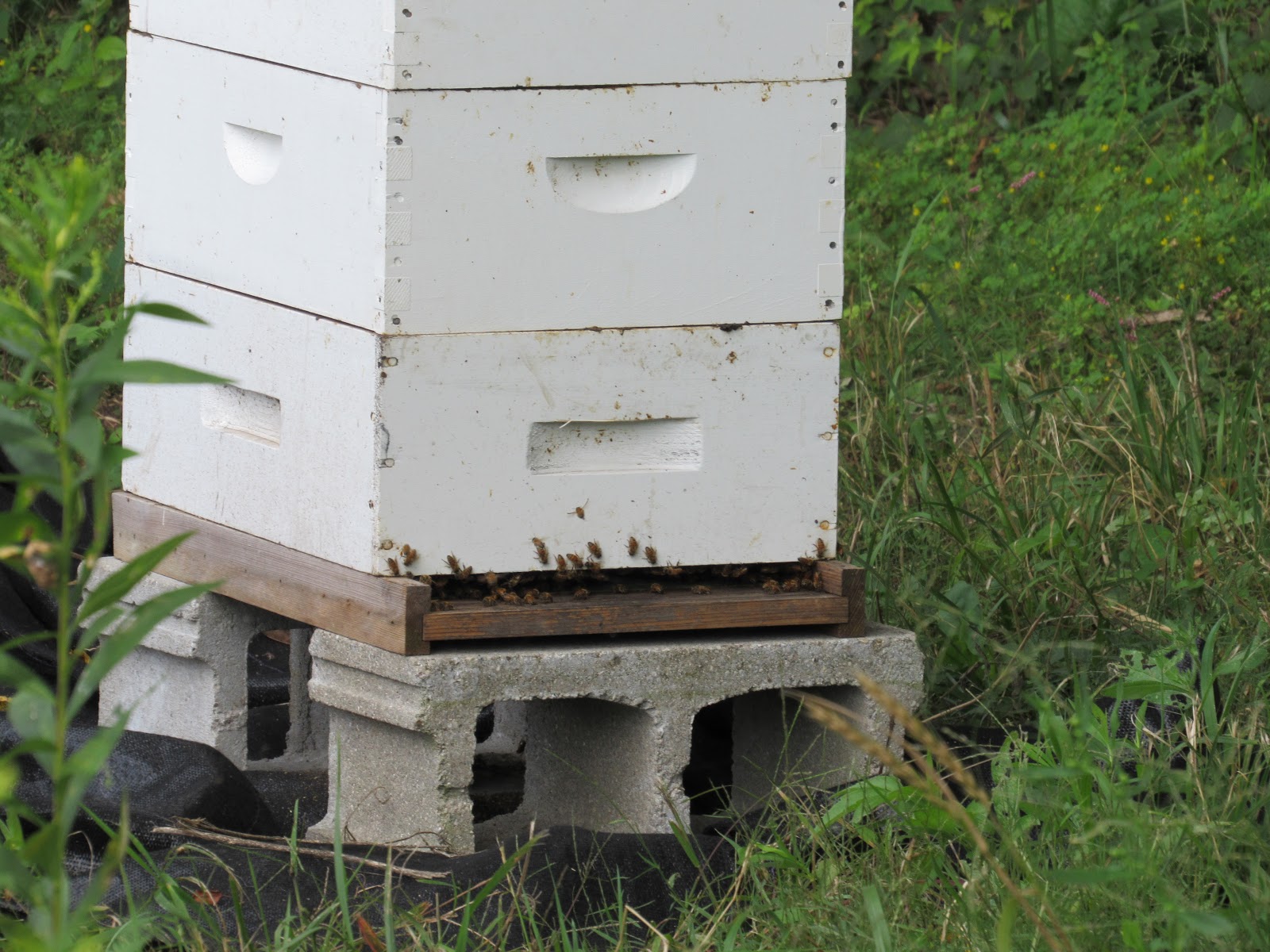
We walked along the edge of the woods for a bit, but there were few birds of note.  Birds, indeed, were all that we saw.  There were a few House Sparrows and House Finches, five Blue Jays, three American Crows, and about four Chimney Swifts.  A Red-bellied Woodpecker, two Northern Cardinals, three Black-capped Chickadees, and a Downy Woodpecker were heard calling as we walked through the woods.  For one reason or another, including even getting a phone call in the middle of my taking a picture, I got very few photos from that section.  The 'common-ness' of these birds also played a factor in my lack of pictures.  I did find a beehive, however, so that was exciting:


We  saw four American Crows sitting up in a tree, occasionally diving at a well-concealed bird.  Hoping for an owl, we instead found this Red-tailed Hawk (Buteo jamaicensis) after a bit of looking.


Considering the size of the grove of trees, without the mob of crows (and a couple of Blue Jays that joined in at the end) we would never have found this hawk:


We also spotted an Eastern Phoebe and a White-breasted Nuthatch in the trees nearby.  Near this point, behind Mason Hall, we discovered a small flock of House Sparrows and Chipping Sparrows, about fifteen and five, respectively.  We then crossed back over the parking lot towards the gym, where we discovered six immature Eastern Bluebirds (Sialia sialis), products of the local nest boxes:


These bluebirds can be seen seemingly everywhere on campus, ironically except where the banding nets are located.  They especially enjoy hunting bugs in the athletic fields:


Overhead, we spotted a couple of Turkey Vultures (Cathartes aura) and zooming in on top of a nearby cell tower,  I spotted several more.  Some days, depending on the winds, over a hundred Turkey Vultures circle over Lincoln Land's campus.  They roost in the trees to the south and east at night, it seems.  In the morning and evening, they are easiest to see in great numbers.


As we walked back, fifteen Canada Geese flew overhead and landed in the pond.  While looking up at them, we also spotted this lone vulture, sitting on the power lights.  It wasn't a great success of a trip, but this was all the way back in early September.  I've had better luck since...

Ebird Checklist:

http://ebird.org/ebird/view/checklist/S31572164

Thursday, April 21, 2016

Osprey, Giant Trees, Cliffs, and... I'm in Springfield still?

Caution...  This is a LONG post. I know some of you don't read everything, and just skim through the pictures, but you should be aware that I drained the power from two camera batteries in one day,  and the results are below.  I cut a LOT of pictures out of this.

Second Caution... Contains Snakes

Third Caution...  Contains Insects.  Of course, if you saw the Second Caution, you probably already left by now.  Most people who hate bugs hate snakes as well.


A day like this requires something to kick it off, and a State-Endangered bird is an excellent way to do so.  This Osprey (Pandion haliaetus) flew over Lincoln Land Community College's pond today. This is the second Osprey I've seen this year, and indeed within the last two weeks.  For all I know, it's probably the same bird, migrating north.


For once,  I also got a good picture of the Pied-Billed Grebe (Podilymbus podiceps), a bird which has cropped up in a large number of posts as of late.   Yes, that is a Red-eared Slider behind the bird.

 Oh, and I also visited the Bird Banding Station.  This is a Dark-eyed Junco (Junco hyemalis). a bird that indicates cool weather.  I don't believe I've gotten such a good picture of a junco anywhere.


Speaking of good pictures, this Northern Watersnake (Nerodia sipedon) decided to hang out nearby.  Literally, it was hanging over a retaining wall above the pond.  I got several pictures.  A larger one was in the water under me as I leaned over to photograph this reptile.  I don't have any problem with snakes, so that was fine by me.   Later, I returned to the spot.  Somebody else had arrived:


This Great Blue Heron (Ardea herodias) is a frequent visitor to this pond, and you can see why.  I don't know what kind of sunfish this bird is eating, but this is the first time I've had a camera ready when the bird gets a fish.  This particular individual just watched placidly as I took pictures.

 It was shaping up to be a great day already, and it became even more so when I saw my first-ever Spiny Softshell  turtle (Apalone spinifera) in the Lincoln Land pond.  (The pond has a name, but I forget what it is.)  This was a much bolder turtle than the Red-eared Sliders I normally see.  It was willing to get within about seven feet of me, albeit with me on shore and it in the water. (By the way,  I cannot tell the difference between Smooth and Spiny Softshells, but I know that the Smooth is much rarer in Illinois, except in the Sangamon River.  I've seen both at one time or another.)

 A nearby Song Sparrow (Melospiza melodia) also got his picture taken, much to his surprise. (I know its a male because it was singing)


As usual, the mystery creature (There's one every post) has arrived.   I've never seen this type of turtle before, and I thought it was a Snapping Turtle at the time. I've never seen one in the Lincoln Land pond before, so it's a red-letter Lincoln Land turtle day. Does anyone know what this is?

Moving on,  I went to visit Carpenter Park Nature Preserve, a place fairly close to my house that I've never been to.  I am currently having major regrets that I've never been here before.  This is an Illinois Nature Preserve, the only one in Sangamon County.  It deserves the title.


This is the first place I've ever seen female Stag Beetles in the wild.  I need to look under more logs.


On top of the logs grew these colorful shelf fungi.  Big downed logs were everywhere.


For the less than botanical, those plants that look kind of like unfolding umbrellas are Mayapples (Podophyllum peltatum), and I've never seen a larger number of these plants than I did here.


Speaking of things I've never seen before... Goldenseal (Hydrastis canadensis) is an extremely uncommon plant, though in this state it is not threatened or endangered.  However, in most states, this plant is protected by law.  Even in Illinois, there is a limit on the harvest of this plant, though in a nature preserve like Carpenter Park there is always an outright ban on collection of any species.  
  

Part of the reason Goldenseal is so rare is that it is believed by many to be an herbal cure for... anything, really.  Like acai. pomegranates, and many other "miracle cures" this poisonous plant is considered to be incredibly all-curing with little to no "scientific" evidence.  Considering its rarity and toxicity,  I think Goldenseal should be left alone for the botanist to get excited about.


Speaking of getting excited, an Eastern Garter Snake (Thamnophis sirtalis)  was discovered in a thicket near a grassland on the preserve...


...and so was this strange little moth, which landed on a member of our party and stayed about for a few minutes.  This is the sort of insect I call a grass moth, which is not its actual name.  It's just a designation for these little grey and/or brown moths that seem to be found in grassy areas.


Up in the trees, this Myrtle Warbler (Setophaga coronata ssp. coronata) jumped about. This is yet another species migrating to Canada eventually.  It's a bit early for most warblers, which prefer to come when there are leaves on the trees.  However, there are always the early birds.


After a bit, we made our way down into the bottomlands, where great trees grew.  This is an old-growth forest, one of the few left along the Sangamon River.  The trees are enormous.


The smaller trees in this area have been cleared before, so the area somewhat resembles a parkland.


Here's the Sangamon River. with an enormous dead tree in the midground.


Violets (Viola sororia), Spring Beauty (Claytonia virginica) and Woodland Phlox (Phlox divaricata) all flowered in a colorful grassy sandbar on the forest floor.


I've seen thousands of Phlox flowers from over a dozen species, and this was the first time I ever found a Phlox plant with a six-petaled flower.  Usually, there's five petals.


A second "different" specimen of Phlox had extremely narrow petals.  I've never seen anything quite like either of these phloxes before.  I contemplated what would happen if they were introduced into the plant industry, but that would involve removing them from a nature preserve, which is illegal.  So, nothing's going to happen on that front.  Also, note  the sand.  Sand is an uncommon form of soil in Sangamon County, so large quantities of it are notable in their rarity.


Back to the trees.  These trees... they may not look that big, but the only larger wild trees I've seen were growing in California, and they were called redwoods and sequoias.  This Sycamore, the tree with the white bark, was easily a standout.


Here we are at the base of the tree, looking up.  In case you hadn't figured it out, I like taking pictures from this angle.  It's probably still hard to perceive how big this tree is.


Here we have a man who's six feet two inches tall at the base of this tree.  Ok, get the picture now?


And now for something completely different...  Buttercups (Ranunculus spp.) grow commonly in these floodplain forests.  You might recognize this plant from a previous post.


Here is a blogger in a tree. 
What a rare sight to see!


Northern Cricket Frogs (Acris crepitans) are the most common small frog species in Central Illinois.


Small creeks formed gaps in the slowly rising bluff line, forming a collection of microclimates.


Along the mouth of one of the creeks, Virginia Bluebells (Mertensia virginica) had begun to bloom.


Here's an excellent example of the type of landform common along the edge of the river.  Rolling bluffs and small ephemeral creeks meet in shallow but narrow valleys.


On the slopes of these valleys grew many plant species, including Bellwort (Uvularia grandiflora)


Under a nearby log, a member of our group discovered this Dekay's Brown Snake (Storeria dekayi), which ought to be familiar by now as the most common woodland snake in central Illinois.  I think I've set a personal record for finding this species of snake this year, with five, possibly six, so far.


Sandstone outcrops began appearing, and the top of the bluffs turned into a glade, with differing flora.


Some Cystoptris ferns grew out of the rocky bank.  Also known as Fragile Ferns, these are the most common fern species in Illinois, forming carpets of foliage in some areas.


This is a sandstone cliff.  Wow.  There are actually exposed rock outcroppings in Sangamon County.  That is a rare sighting.  Sincerely, Sangamon may not be the flattest county in Illinois, but it is close, and this is one of the few actual cliffs for miles.

Of course, on exposed sandstone outcroppings come particular plant species.  This rocky-soil specialist, Sand Phlox (Phlox bifida) is a rare find in most parts of Illinois, and the same was true in Carpenter Park, where I saw it in only one location.


This ledge was a good thirty to forty feet above the river.  Don't trip.


Here is an entire bluff covered in nothing but Fragile Ferns (Cystopteris spp.)  I was in heaven.


I couldn't resist.


Away from the river, we found this Jack-in-the-Pulpit  (Arisaema triphyllum), a species notable for having a colloquial name that I do not understand.  I've been told many times how the spike in the middle (not visible in the picture)  is supposed to resemble a preacher standing in his pulpit, but I do not see that at all when I look at the flower.


I ventured down into the canyon nearby, trying to see if there were any orchids or rarer flowers.


Bellwort (Uvularia grandiflora) grew on the steep, rocky sides of the ravine, the yellow flowers dangling over the edge as in the picture above.


I walked down to the canyon's floor. where a small stream snaked its way down towards the river.  The creeks in Carpenter Park are so undisturbed that they have developed sandy beds and crystal-clear water.  These streams eventually dry up in the summer when the rain slows.


Wild Stonecrop (Sedum ternatum) was the last major discovery of the day.  This is a plant I am far more familiar with in cultivation than in the wild.  It appears that this plant, unlike most Sedum, prefers the shady moist cliffsides of wooded canyons.  Of course it's not particular...

Yes, that is a piece of wood.  An old bridge across the creek had apparently collapsed and been left alone for a few years.  The Wild Stonecrop is growing on wood, with a thin veneer of dirt.  The blurry brown spot, by the way, is a gnat that landed on my camera lens.  After this, I departed from this wonderful place, exhausted by the trip but thankful for learning of such a wonderful nature preserve.


I did warn you it was going to be long.