Sunday, April 17, 2016

Top Ten Best Moments of First Quarter of 2016


Winter is over here in Central Illinois.  I figured it was time to do a recap of the best (nature) moments of that season, as that is the first season in which I sincerely dedicated a good portion of time to this blog.  (I'm just going to run it through March, and since we're still getting frost warnings and have juncos,  I believe that qualifies.  Until the juncos go north, it's still winter.) I'm also writing this post as a sort of index of what's worth reading on my blog from January-March 2016.  This article is thirty-three posts condensed into one. with links to the top fifteen or so posts.  I know a lot of you are busy, so this is kind of a "catch-up" article.


Honorable Mention: Being Published In  "The Lamp" Newspaper

Well, seeing my work in print is a fun experience.  I actually haven't released my second article out on this blog, partially due to the fact that it is about Eastern Hemlocks.  It will be released out here soon.  Also, the picture above which went with the article and  which I have actually set as my phone background, was taken by my brother.  He did not receive credit, so I am giving it to him here.


10. Discovering Marina Point

This is one of the three best birdwatching areas around Lake Springfield, along with Lincoln Memorial Gardens and Center Park.  I knew about the other two, but I had no idea of Marina Point until recently.  As you can see, the ducks and gulls are enjoying it immensely.


9. New Deer/Turkey Record

59 deer and 27 turkeys is a huge number of wild animals to find along one road.  Yet, all the way back in January, that's exactly what I did at Chatham Wildlife Sanctuary.  A recent visit had three deer and no turkeys, and the animals seem far more common in the winter.  Still, it's worth a visit.


8. Finding Common Gallinules  At Lick Creek

(The picture above is from an old trip to Florida) Well,  I mean, it's not every day you do something like find a State-Threatened  Endangered Bird.  (Well,  I just looked it up, and it's even rarer than I thought, in this state.)  So far this year,  I've seen four State-Endangered birds (Short-eared Owl, Common Gallinule, Northern Harrier, and Osprey), as well as two which have since been removed from State-Threatened listing (Pied-billed Grebe and Brown Creeper) and were incorrectly said to be State-Threatened on earlier posts.  Sorry about that.  Here's the checklist I am using.


7. Common Loons In Breeding Plumage

( Look how much the photo quality improves over the years)  Common Loons may not be rare, but this is my favorite Illinois bird...


6. An American Woodcock In My Sideyard

...Although Timberdoodles are a close second.  Finding this bird was such a surprise to see in my suburban neighborhood.  I even got a video, which is posted on Youtube and linked here.  Whether called Woodcock, Brush Snipe, or Timberdoodle, this bird is basically the Illinois version of the New Zealand Kiwi, and is not nearly well known enough.  These birds dance for worms, literally.


5.Rediscovering Eastern Hemlocks in Illinois

I know I keep harping on this, but this is one of my favorite moments, and was easily the best thing I did all of last year.  The rediscovery this year at Starved Rock State Park, confirming that this IS a native population, was an excellent day, which I stretched over three posts.  (For those who don't know what I'm talking about, go here.)


4. Seeing Short-Eared Owls/Northern Harriers

These two State-Endangered birds are what got me into birding.  On top of that, meeting someone  I didn't know who reads my blog was even better.  See here for more details.


3. Fourteen Duck Species in One Park

Yeah, this was the second luckiest I got this year in terms of birds, and it came just when I started out birding.  If Short-eared Owls got me into birding, this is what got me hooked.  Despite birding for hours on hours afterwards,  I actually haven't repeated my successes of that day.  It is now a record to beat.  To recap-  I saw Ruddy Ducks, Common Goldeneyes, White-winged Scoters, Greater Scaups, Lesser Scaups, Redheads, Canvasbacks, Ring-necked Ducks, Mallards, Hooded Mergansers, Buffleheads, and Common Mergansers.  Here and here are the two articles, for more information.


2. Being Detained as a Terrorist

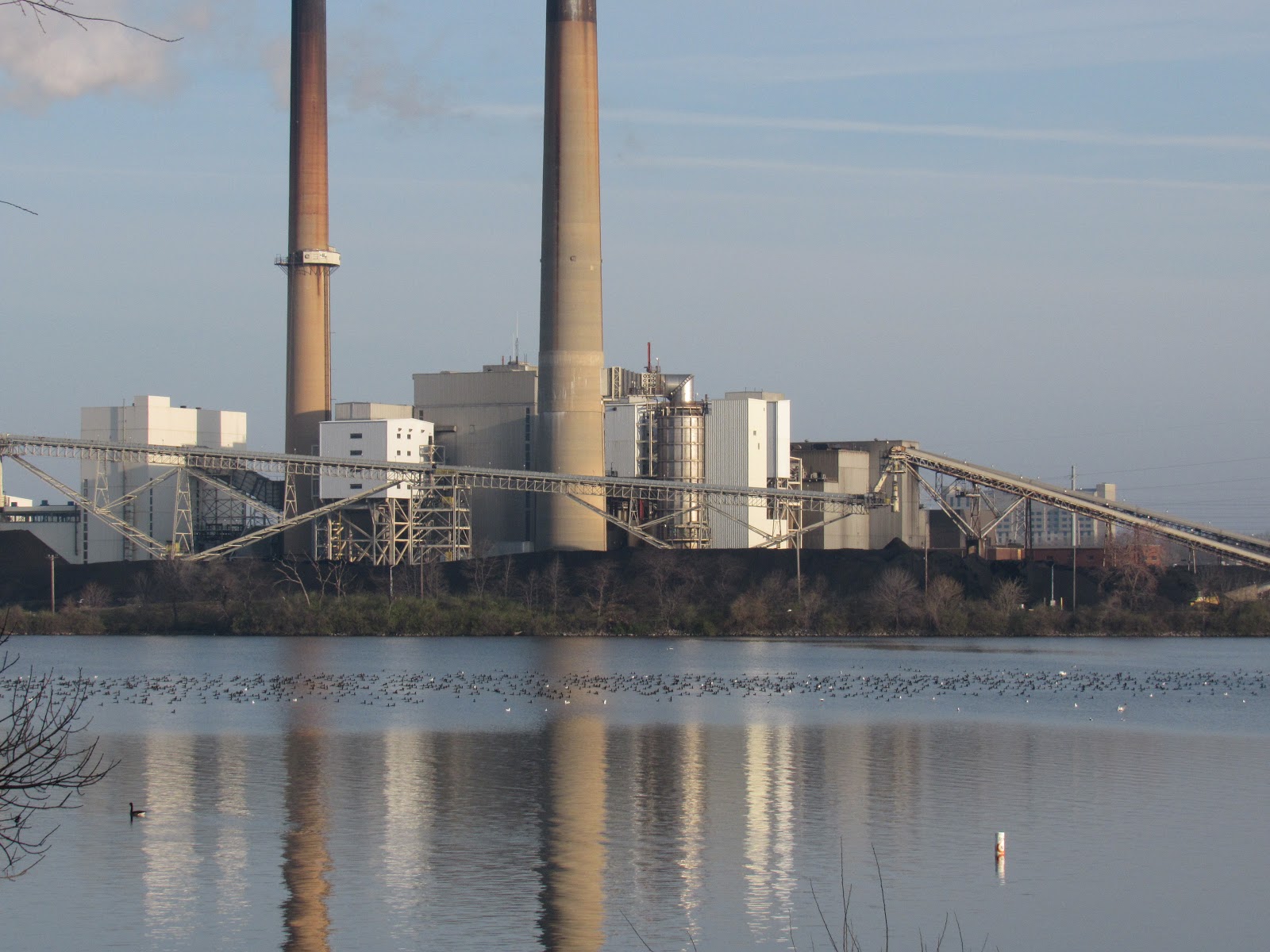
The expression people have when I say this is good enough, but the complete story is even better.  For the anecdote alone, as well as the fact that a government institution in Illinois is actually acting competantly, I give this my  #2.  To recap:  I was taking pictures of gulls in the direction of the power plant with a fancy camera.  Two Conservation Police officers saw me and asked me to step over.  They wanted to examine my pictures.  What I didn't know, as I showed them the pictures, was that my brother had taken a picture of Mom making a silly face.  As a result, the officers and I had a good laugh.  We went our separate ways.  Since the officers had called me over, it was technically detainment, and so I get to use that phrase.  Later, on a separate trip, I snapped the above picture deliberately, as a joke,( and also for the cormorant flotilla in front of it, but this was a different trip.)


1.The Ides of March

This insanely lucky day was so great that I  had to write two blogposts about it.  Seriously.  That day goes down in the annals of this blog.  It will be on the list for top ten of this year, easily.  And to think...  If I had gone ahead after lunch and skipped my chemistry lab, it probably wouldn't have happened as it did.  I had in fact, considered going off and skipping lab, as my usual lab partner was sick that day.  Instead,  I went after lab, first to Lincoln Memorial Gardens and second to Nipper Wildlife Sanctuary as a field trip.  Both were great experiences.  I was also very lucky to get decent pictures, as the upload glitched, resulting in a near-catastrophe and considerable hair-pulling.  That was the day I saw my first loon, my first chorus frogs, my first fairy shrimp... It was a huge day.  The colorful Eastern Garter Snake (Thamnophis sirtalis) below was a bonus.


I  recently learned that I am going to visit the Smokies this year, so I can't wait. Expect that in a couple months' time.  And to think...  I'm not even in my twenties yet. I've gotten two flexible part-time jobs,  my schooling is going pretty well, and I have a LOT of great friends, many I made or drew closer to this year.  It's a wonderful life, and I know I don't deserve all this.  Thank you,  God.  You've done way, way more for me than I could even begin to do back, and as that is how it should be, I am so thankful for all that I have.  Also, thanks to all my friends, especially the ones who put up with the Russian folk music between hikes, and to the many nature bloggers online who inspired me to write my own blog.  It's fascinating to me how in the middle of this busy week, I still feel thankful.  I suppose it's the birthday cheer, because I turned nineteen the day I wrote this.  I'm really not trying to brag, it's just that I don't understand why good things keep happening to me, and I  feel so thankful for it right now.  Anyway, expect the Smokies in a few weeks' time.


Thursday, April 14, 2016

Skipping Work For Barred Owls

Okay,  I didn't actually skip work.  I just went, and after a song and dance routine, they told me I wasn't needed at the time.  Yes,  I do mean a literal song and dance.  We were joking around.
At any rate, I rushed home, grabbed my camera, and drove down to the Chatham Wildlife Sanctuary.  Apparently, the preserve has a permanent population of Pileated Woodpeckers (I dare you to say that three times fast).  While  I definitely saw those gigantic woodpeckers, and I jumped up and down a couple times when I did out of excitement,  they saw us first.  You wouldn't think the biggest woodpecker would be so darn skittish, but these birds, as soon as they saw our small group, flew away.  So, I got no pictures.  Jumping probably didn't help.

 I did find a few of these mysterious leaves out in the woods.  Could it be an orchid?  I hope so, but I have my doubts.  More likely, it's an introduced spring bulb that just hasn't flowered  yet.

 However, plenty of plants were flowering,including this White Trout Lily (Erythronium albicum).  Another member of our party and I got to talking, and we failed to notice that the entire rest of the group had stopped.  Then we noticed.  Then we found out why.

 It's really not every day you see a Barred Owl  (Strix varia).  As a matter of fact, this is my first time.  Evidently, the rest of the group had seen it fly and then land.  It watched us from about a hundred feet away.  This is probably the second most common owl in  Illinois, after the Great Horned Owl.
By common,  I mean that people see it.  No doubt some of the other owl species, like the Screech Owl are a bit more populous, but are less visible in general.


The entire area was full of woodpeckers and shelf fungi. Evidently the trees are not healthy.


After the all-too-short field trip,  I made my own.  Going over to a pulloff by the lake,  I spotted many things, including about a hundred Tree Swallows (Tachycineta bicolor), swarming in what I suspect to be a migrating formation over the lake.


Of course, on the lake itself were Pelicans,  Cormorants, Gulls, and... wait.  That gull in lower left has a black head?  What nonsense is this?


That would be a Bonaparte's Gull (Chroicocephalus philadelphia)  (Copy/Paste is a wondrous thing).  This species is named after  Napoleon Bonaparte's nephew, Charles Lucien Bonaparte.  Charles, a naturalist, came to the United States in the early 1800s and discovered a lot of birds.  The genus name of mourning doves and their relatives, for instance, is Zenaida.  This was Charle's wife's name, which he gave to this group of birds.  Charles Lucien Bonaparte was nearly as important as Audubon in the history of North American birds, and in his time was certainly more prominent.

Here, one can seem more of the Bonaparte's Gulls, as well as a rogue tree swallow.  These gulls numbered in the hundreds.  They are migrating northwards to the far taiga woods of Canada.


 Wood Ducks (Aix sponsa), meanwhile, were found near wood.  This is good and proper.

 These Double- Crested Cormorants (Phalacrocorax auritus), meanwhile, decided to have a convention on a log nearby.  When they move on,  I suspect the local fish population will breath a considerable sigh of relief, as there are thousands of these fish-eating birds out on the lake.  I moved on from this place after a bit of watching the spectacle.  Going onward,  I stopped by another spot on my way back, also along Lake Springfield and the Chatham Wildlife Sanctuary.

 This is quite a spectacular female Mallard...  Oh, wait. What's with that bill?  Actually, this is a female Northern Shoveler (Anas clypeata).  That bill is naturally oversized.   These birds prefer mud-bottomed marshes, which is exactly where I found it.  When there, they use that peculiar bill to "shovel" through the mud, extracting invertebrates to eat.


Here is a male as well, a very distinct specimen.  Even at a far distance, that bill makes this duck clearly different from anything else in Illinois.  I watched the group of roughly a dozen Northern Shovelers forage for a bit, before leaving and going on.   It was  a wonderful, if brief, trip, and I had a lot of fun.  I've never seen either Barred Owls nor Bonaparte's Gulls, and skipping work was a bonus.
All these crazy waterfowl just added to the fun.  Anyway, my schedule may be getting busy, but the birds keep coming, and I'll keep posting.  Have a good day, all!


Monday, April 11, 2016

Salamanders Make It Okay To Be Late For Class, Right?

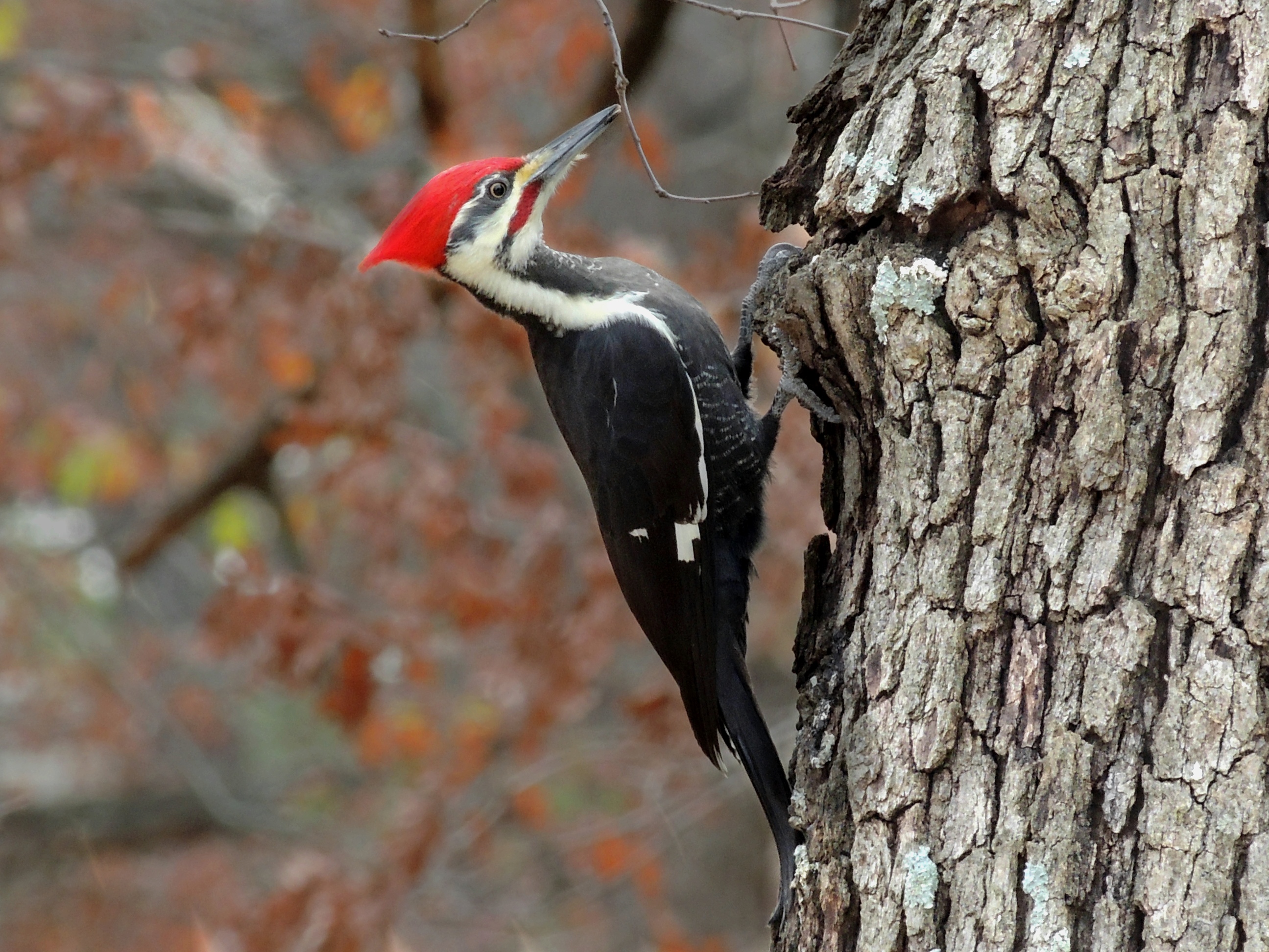
 If it feels like I've just started living at Lick Creek Wildlife Area,  that would be because every time I go there, I see something new.  It is hands down one of my favorite wildlife areas in Springfield.  On my second to last field trip, I started out the day with several Hermit Thrushes (Catharus guttatus), as well as some photobombing unknown birds.  After this, a long and complicated series of events led to a hike over the marshes to meet with the field trip.  During this hike,  I saw the Pileated Woodpecker (Dryocopus pileatus), shown below  (Photo Credit Wikipedia)


This is the largest extant species of woodpecker in North America (extant means not extinct).  It is also the last of the seven woodpeckers in Illinois I have to see this year.  I set a goal a while back to see all Illinois species of woodpeckers, and I have done so, though the Pileated remains unphotographed by me, considering they are the most skittish of the Illinois woodpeckers.  The only reason  I saw the two Pileateds in the marsh was because they took off flying away from me.

When I finally found everyone else, one of the guys had this  juvenile Dekay's Brown Snake  (Storeria dekayi) in a coat pocket.  After showing it to me, we released it back under a log.


This large millipede was also found under a nearby log.  This was about two inches long when uncurled, which makes it not the largest millipede I've seen in Illinois, but the largest I've seen in Sangamon County by far.

There were some huge old trees in this upland section of the preserve.  By no means is this an old-growth forest, but I do suspect that sections of this preserve have survived intact from before European settlement.  (I have to specify European settlement, not because I have to be politically correct, but because in this case it makes more sense, as that's when most of the old trees were cut down.  There are a few old-growth trees locally, but for the most part Illinois lacks original landscapes of any kind.  In Central Illinois only Mason County preserves large natural landscapes.)

These are oaks  (Quercus spp.), hundreds of years old.  While there are only a few, and the rest is secondary forest, this does speak to the age of parts of this forest.


Underneath, Prairie Trilliums  (Trillium recurvatum) bloomed.  Large populations of Prairie Trilliums are a good sign of a healthy forest, although in Illinois these plants are everywhere.

Woodland Phlox  (Phlox divarica) has also started to open up locally, the pale blue flowers extremely common in certain sections around the edge of Lake Springfield.

A Northern Flicker,(Colaptes auratus),one of the hundreds of woodpeckers in this area, foraged on a nearby tree.  I do mean hundreds.  If you want to see woodpeckers in this area, hiking to the edge of the marsh, where the dead trees above the waters provide an ideal habitat for woodpeckers to chisel away and hunt for grubs.  I saw about fifteen Northern Flickers that day, and these aren't the world's most common woodpeckers, as they are just passing through to Canada.

Goldfinches (Spinus tristis) aren't woodland birds usually, but they live near the edge of the swamp.

Here's one of my best pictures, of a Swamp Sparrow (Melospiza georgiana), which should be leaving for Canada soon.  These and woodpeckers are  the most common birds in this preserve as of late.


Wood Ducks (Aix sponsa) nest in the trees in the middle of the marsh, in woodpecker-dug holes. Here, a female Wood Duck watches me from a good hundred feet away.  I noticed at this point I was going to be late for my next class. I trompsed through the marsh in my rubber boots, realized the water was a bit high before I got halfway across, turned around, and went back to the edge, scaring a couple of unknown animals into the water.  By the way they moved, I suspect I saw a couple of the lighter tan form of Dekay's Brown Snake shown in this post.  I was stuck in a dilemma.  I could walk around the marsh, and be really late to class.  I could try to walk through a different section of the marsh, and be less late to class, or I could skip class and enjoy my time out here.  As I was thinking over this, I flipped over a sheet of bark near the edge of the marsh. Then I let out a happy yell.


This is a Smallmouth Salamander (Amblystoma texanum) the most common salamander in Central Illinois.  It is a member of the Mole Salamanders, notable because... they dig holes.  I looked at it for a minute, and then put it back under its bark and looked out at the marsh again.  Below is my view:


  Time ticking,  I crossed the marsh at a slightly narrower section, hopping from grass clump to grass clump.  I like to call this clod-hopping for no real reason whatsoever.   About three- quarters of the way across,  I scared off the Pileated Woodpeckers again.  Nevertheless, I was soon across, with few minutes to spare...  I walked quickly across the floodplain forest on the other side, checking under only a few boards, logs, and sheets of bark.  Nevertheless,  I turned up this fellow:


Hurrah, another salamander!  This is another Smallmouth Salamander. but as I have never found two salamaders in one day, I was quite happy about this.  Central Illinois is not a hotspot for salamanders, as these are forest species much happier in areas where the majority of the Precolumbian enviroment was wet woodland.  As a result, about half of all Illinois salamander species range into the eastern and southern edge counties, going no further.  I put this fellow back and left, rushing back to the car.


In a muddy spot near the bridge,  I paused when I found these raccoon tracks, freshly made.  I wonder how long ago this animal passed by- probably the previous night?


As I was about to leave, I spotted two White-tailed Deer (Odocoileus virginianus) grazing by the side of the road.  It never ceases to amaze me how an animal can appear just as I am about to leave.  On the last four hikes, a flock of pelicans, a beaver, an osprey (not covered by a previous post), and now these deer appear just as I go to leave.  Always keep your eyes open.  I can't think of a snappy, witty conclusion, so that's all for now.